

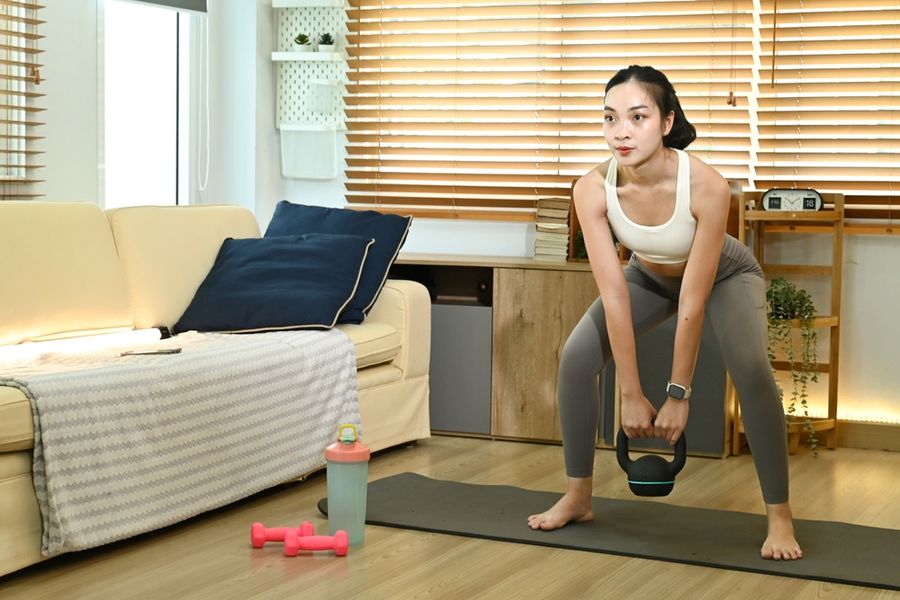
Starting a home workout routine can feel like a big step. The good news is that you do not need a basement full of fancy machines to get fit at home. A few simple, well-chosen pieces of equipment, along with some basic body movements, are usually enough for beginners to build strength, burn calories, and improve overall health. It's helpful to understand the best home workout gear for people who are just getting started.
Start With What You Already Have: Your Body
Before you spend any money, remember that your own body is one of the best workout tools you have. People starting an at-home workout often have no equipment at all, or maybe a few light dumbbells, resistance bands, or a stability ball, and that is usually plenty to get going (source). Bodyweight moves like squats, lunges, push-ups, and planks can be done in almost any small space and adjusted to match many fitness levels, from total beginner up to advanced.
A simple goal can give your routine some shape. Adults are encouraged to do muscle-strengthening activities that work all major muscle groups on two or more days each week, and a full-body home workout done a couple of times a week fits that recommendation well (source). Starting slowly, doing short sessions you can stick with, and adding more time as you feel stronger is a smart way to begin. This approach also lowers the chance of getting hurt or burning out before the new habit takes hold.
Resistance Bands: Cheap, Compact, and Easy
Resistance bands are one of the best first picks for a home setup. Small dumbbells, bands, yoga balls, medicine balls, kettlebells, and jump ropes all work well for beginners because they are easy to store in a closet or under a bed and they support many different moves (source). Bands take up almost no space and travel well, which is helpful if you live in a small apartment or move around often.
Bands work by adding gentle, steady tension to your muscles during a movement. They can be used for arm curls, rows, squats, glute bridges, and dozens of other exercises. Many bands come in sets with different tension levels, so you can pick a lighter band while you learn a new move and switch to a stronger one as you get more comfortable. The fact that bands are also gentler on the joints than heavy weights makes them a friendly option for new lifters, older adults, and anyone coming back from a long break from exercise.
A Set of Dumbbells for Building Real Strength
When you are ready to add weight, a basic set of dumbbells is hard to beat. Strength training is most useful when you work all the major muscle groups at least two times a week, and dumbbells make this easy to do at home with moves like rows, presses, curls, and goblet squats (source). You can build a simple, balanced routine using just two or three pairs of weights kept in a corner of a room.
For beginners, the size of the weight matters a lot. Exercise physiologists often suggest that men start with dumbbells in the 5- to 25-pound range, while women start with 3 to 15 pounds (source). Picking up something too heavy at the start can lead to sloppy form and injury. It is better to start light, learn the movement, and then move up over time. Adjustable dumbbells or a small rack of fixed weights both work well for a home setup, depending on your space.
Jump Rope and Other Simple Cardio Tools
Cardio is the other half of a strong beginner routine, and you do not need a treadmill or a fancy bike to get it. Jump ropes are an affordable, beginner-friendly cardio tool, and small items like medicine balls and kettlebells can also raise your heart rate during quick circuits (source). A jump rope fits in a drawer, costs very little, and gives you a real workout in a small space.
Other low-cost cardio ideas include marching in place, climbing up and down stairs, or following along with no-fee online workout videos. Mixing short bursts of activity with short rest breaks is a flexible way for new exercisers to build stamina. Pair that with a simple full-body strength session a couple of times a week, and you have a balanced beginner routine that lines up with common at-home training advice (source). Over time, you can add more challenging tools as your interest and skill level grow, but you really do not need them to make steady progress at home.
Building a Routine That Works for You
The best home workout equipment for beginners is the gear you will actually use. Start with your own body and a friendly weekly schedule, add a set of resistance bands for variety, bring in a pair of dumbbells when you are ready for more strength work, and keep a jump rope or other small cardio tool on hand for quick sessions.
Stick with simple moves you can do safely, give yourself a rest day or two each week, and slowly add time or weight as your body adapts. With a few smart picks, you can build a healthy routine right at home that fits your space, your goals, and your real life.