

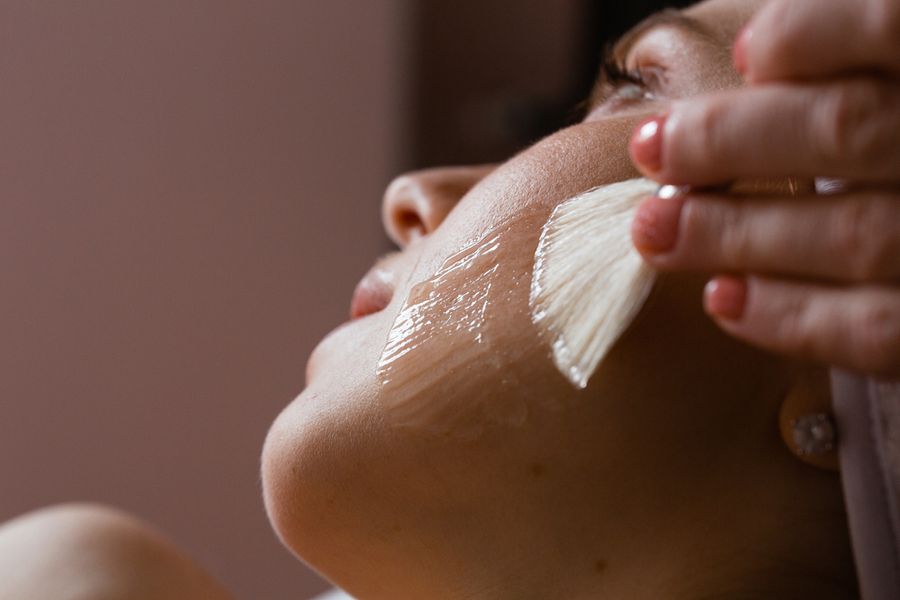
Chemical peels have long been used to improve skin texture, reduce dark spots, and create a smoother appearance. In the United States, professional treatments are still popular, but at-home versions have become more widely available and easier to use. It begs the question: can at-home options deliver the same results, or are they just a lighter version of a more powerful treatment? Understand how each option works and what your skin really needs.
What Is a Chemical Peel?
A chemical peel is a treatment that uses acids to remove the top layer of skin. This process helps reveal newer, smoother skin underneath. It can also improve the look of fine lines, uneven tone, and mild acne.
At-home peels usually contain lower-strength acids, such as glycolic acid, lactic acid, or salicylic acid. These are designed to gently exfoliate the skin over time. Professional peels, on the other hand, often use stronger formulas that penetrate deeper and produce more noticeable results in a shorter period.
How Do At-Home Peels Compare to Professional Treatments?
The main difference between at-home and professional peels is strength. At-home products are milder and designed for regular use. They offer gradual improvements and are generally safer for unsupervised use.
Professional treatments are more intense and are usually performed by trained specialists. Because they work at a deeper level, they can address more serious concerns, such as deeper wrinkles or more noticeable discoloration. However, they also require more recovery time and carry a higher risk if not done correctly.
What Results Can You Expect at Home?
At-home chemical peels can improve skin texture, brightness, and clarity over time. With consistent use, many people notice smoother skin and a more even tone. These products are especially useful for maintaining results between professional treatments or as part of a regular skincare routine.
However, the results are usually subtle and take time to appear. They are not designed to create dramatic changes in a single use. For deeper skin concerns, at-home peels may not be strong enough to deliver the desired outcome.
Are At-Home Peels Safe for Everyone?
At-home chemical peels are generally safe when used as directed, but they still require care. Overuse or applying too strong a formula can lead to irritation, redness, or peeling beyond what is expected.
People with sensitive skin or certain conditions may need to be more cautious. Starting with a lower strength and using it less frequently can help reduce the risk of irritation. It is also important to avoid combining multiple strong products at the same time, as this can increase the chance of damage.
When Should You Choose Professional Treatments?
Professional peels may be a better option for those with more advanced skin concerns. If you are dealing with deep acne scars, significant sun damage, or uneven pigmentation, a stronger treatment may be needed to see real improvement.
A trained professional can also assess your skin and choose the right type of peel for your needs. This level of guidance can reduce the risk of mistakes and help achieve more targeted results. While professional treatments are more involved, they can offer benefits that at-home options cannot match.
Can You Combine Both Approaches?
For many people, the best approach is a combination of both at-home and professional treatments. At-home peels can help maintain results and support daily skin care, while occasional professional treatments can address deeper concerns.
This balanced approach allows you to get the benefits of both methods without relying too heavily on one. It also gives you more flexibility to adjust your routine based on your skin’s needs over time.
A Helpful Option, But Not a Full Replacement
At-home chemical peels can be a useful tool for improving skin texture and maintaining a healthy appearance. They are easy to use, accessible, and effective for mild concerns when used consistently.
However, they are not a complete replacement for professional treatments. Stronger peels performed by trained experts can deliver deeper and faster results for more serious issues. For most people, the best solution is understanding the limits of each option and using them in a way that supports long-term skin health.