

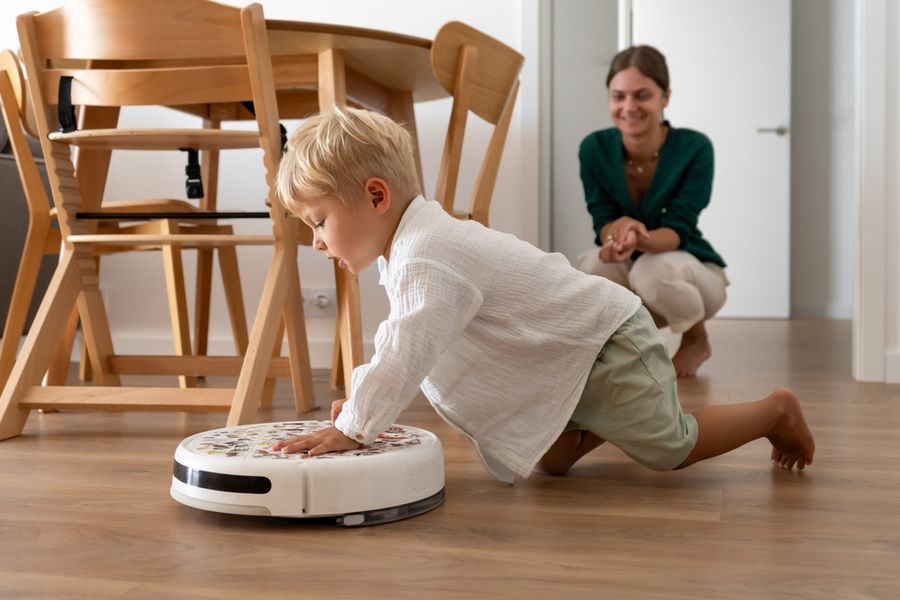
Keeping a clean home can be a challenge for busy households across the United States. Between work, family, and daily responsibilities, vacuuming often becomes a task that gets delayed. Robot vacuums have gained popularity as a hands-free solution that promises to keep floors clean with minimal effort. Before handing over your hard-earned cash, it's crucial to understand whether they truly deliver enough value to justify their place in your home.
How Do Robot Vacuums Work?
Robot vacuums are small, automated devices designed to clean floors without direct supervision. They move around your home using sensors and built-in programming to avoid obstacles and cover as much space as possible. Many models can return to their charging stations when their battery runs low.
Some robot vacuums can be controlled through smartphone apps or voice assistants. This allows users to schedule cleaning times or start a session remotely. The goal is to make routine cleaning easier by handling it in the background while you focus on other tasks.
Popular brands like iRobot Roomba, Shark, and Roborock offer models with advanced features such as room mapping, no-go zones, and automatic dirt disposal. Higher-end models can learn the layout of your home over time, allowing for more efficient and targeted cleaning sessions.
What Makes Them Appealing for Busy Homes?
One of the biggest advantages of robot vacuums is convenience. Instead of setting aside time to vacuum, the device can run automatically on a schedule. This is especially helpful for households with pets, children, or high foot traffic, where floors can get dirty quickly.
Robot vacuums can also help maintain a consistent level of cleanliness. Even if they do not replace deep cleaning, they can reduce the buildup of dust and debris between regular cleaning sessions. This can make the home feel cleaner overall with less effort.
Do They Clean as Well as Traditional Vacuums?
While robot vacuums are useful, they do not always match the power of traditional vacuums. They are generally better at handling light debris, such as dust, crumbs, and pet hair on hard floors or low-pile carpets.
For deeper cleaning, especially on thick carpets or in corners, a standard vacuum is often more effective. Robot vacuums may miss certain areas or struggle with tight spaces. Because of this, many households still rely on a regular vacuum for occasional deep cleaning.
What Are the Common Limitations?
Robot vacuums have improved, but they still come with clear limitations that affect how well they perform in real homes. Navigation can be inconsistent, especially in spaces with tight layouts, furniture clusters, or multiple floor transitions. While some models map rooms, they can still miss edges, corners, or areas under low furniture where deeper cleaning is often needed.
They also struggle with certain surfaces and debris types. Thick carpets, high thresholds, and larger debris can reduce performance or stop the unit entirely. Pet hair can wrap around brushes quickly, requiring frequent manual cleaning.
Battery limits remain an issue in larger homes, where the vacuum may need to recharge mid-cycle and resume later. In addition, smaller dust bins fill up quickly, especially in busy households, which means regular emptying is necessary to maintain effectiveness.
Are They Easy to Maintain?
Maintaining a robot vacuum is generally simple but still requires regular attention. Brushes and filters need to be cleaned to keep the device working efficiently. Hair and debris can build up over time, especially in homes with pets.
Software updates and occasional troubleshooting may also be needed for models that connect to apps. While these tasks are not difficult, they are important to keep the device running smoothly. Skipping maintenance can reduce performance over time.
Who Benefits the Most from Robot Vacuums?
Robot vacuums are most useful for people who want to save time on daily cleaning tasks. Busy professionals, families, and pet owners often find them helpful for keeping floors tidy without extra effort.
They are also a good fit for smaller homes or spaces with open layouts, where the device can move freely. In more complex spaces with many obstacles, their effectiveness may be reduced. Understanding your home layout can help determine if they are a good match.
A Helpful Tool, Not a Full Replacement
Robot vacuums can be a valuable addition to a busy household, offering convenience and consistent light cleaning. They are especially useful for maintaining floors between deeper cleaning sessions and reducing daily workload.
However, they are not a complete replacement for traditional vacuums. Their performance depends on the environment and how they are used. For most people, the best approach is to view robot vacuums as a helpful tool rather than a complete solution for all cleaning needs.